
n 671, the Chinese monk Yijing boarded a merchant ship in Guangdong and sailed south. After roughly a month at sea, he reached Sriwijaya, a realm centered on the Musi River near modern Palembang. He stayed six months to study Sanskrit and Malay, then continued to India. His note is a small, concrete clue to a much larger system: Sriwijaya was not a single walled capital with a rigid border. It was a maritime network of ports, river settlements, and chiefs whose loyalty shifted with profit and pressure. That network linked the Strait of Malacca to China, India, Java, and the Arabian Sea. Sriwijaya grew rich by making movement predictable—pilgrims, cargo, envoys, and sailors could find warehouses, interpreters。monasteries, and repair yards. The name itself became a credential, a label that told a foreign captain he was entering a known commercial world.
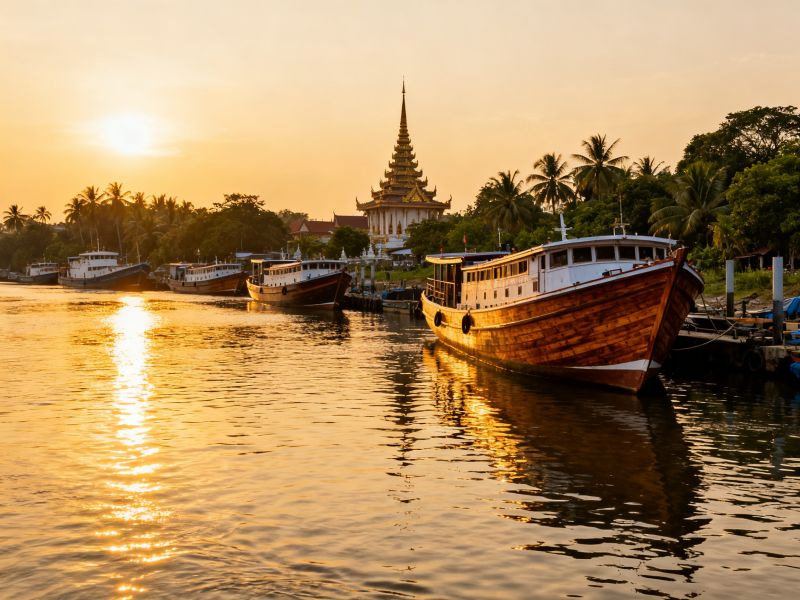
The geography did much of the work. The Musi gave Sriwijaya access to Sumatran forest products—camphor, benzoin, rattan, resin, and gold—while the nearby straits carried ships from India, Persia, Arabia, and China. A vessel waiting for the monsoon could anchor, careen its hull, buy rice, and exchange cargo. Palembang's museum displays bronze Buddhist images, Chinese ceramics, and inscription fragments that look ordinary until you remember the distances involved. Sriwijaya did not simply sit beside the sea;it turned the sea into a corridor. Rulers taxed trade, offered protection, and occasionally used force, but their authority depended on deals with port chiefs and local elites. That flexibility was a strength. It also meant Sriwijaya could never be as centralized as its Chinese or Indian admirers imagined. The state's income came in layers: tolls on cargo。gifts from visiting envoys, and claims on inland collectors who brought resins and gold downriver. A captain might pay in cloth, silver, or credit;a monastery might receive land and labor. Sriwijaya's commercial law was probably customary and local, not a single code, which makes the surviving stones more valuable than they first appear.Inscriptions give the network a harder edge. The Kedukan Bukit stone, dated 683, records a royal expedition and the founding of a settlement. The Talang Tuwo inscription of 684 promises merit for those who plant gardens and dig ponds. The Telaga Batu stone piles curses on officials who betray their oaths. These are not the records of a paper bureaucracy;
they are public performances of authority, carved in Old Malay and mixed with Sanskrit formulas. In Palembang, the river still dominates the city's imagination—houses on stilts, muddy water, boats moving before the heat rises. Sriwijaya's capital may lie under those streets, but the river explains why the kingdom appeared there and why it did not look like Angkor or Bagan. Sriwijaya's rulers expressed power through oaths, gift-giving。and access to water, not through massive stone temples alone.
Buddhism traveled through Sriwijaya with the same ease as pepper and tin. Yijing praised the Buddhist scholarship he found and recommended that pilgrims study in Sriwijaya before going to India. Monasteries, teachers, and manuscript copyists made Palembang a serious stop for monks from China and India. Chinese court records list envoys from Sriwijaya in the seventh and eighth centuries, carrying aromatics, turtleshell, and Buddhist relics. That religious traffic gave Sriwijaya prestige, but it also attracted dangerous attention. In 1025, a Chola fleet from South India attacked ports in Sumatra and the Malay Peninsula, seizing treasure and damaging Sriwijaya's reputation as a safe maritime hub. The raid did not erase Sriwijaya overnight. It exposed a vulnerability that had been there all along: a power built on trade routes can be wounded by anyone who can reach those routes. Recovery came in pieces, through local alliances and new commercial arrangements。not through a single heroic comeback. Sriwijaya's monasteries kept copying texts even as its tax base weakened.By the thirteenth and fourteenth centuries, the old advantages had shifted. Chinese shipping changed, Java's Majapahit expanded, Islamic port cities grew along the straits, and silt may have clogged some river approaches. Sriwijaya did not leave a dramatic ruin to visit;it left a pattern. The name survives in Indonesian universities, museum labels。and political speeches, sometimes inflated into a nationalist ancestor, sometimes reduced to a vague memory. I think the more interesting Sriwijaya is the practical one: a river-based hub that managed diversity, spoke several commercial languages, and understood that control of the sea is never permanent. A modern visitor expecting pyramids will be disappointed, but a map of the straits makes the achievement clearer: Sriwijaya made a crowded sea legible. Its inscriptions, shipwreck ceramics, and Buddhist bronzes tell a story less about a grand empire than about a durable business of connection. That business was messy, contingent, and human—which is why Sriwijaya still repays close attention.