Andrea Petagna is not a name that echoes in the same breath as Italy's elite strikers, yet his career is a case study in persistence and adaptation. Born in Trieste in 1995, Petagna rose through AC Milan's youth system, a product of the same academy that nurtured Paolo Maldini and Franco Baresi. But his path diverged from the typical Milanese prodigy. Instead of breaking into the first team, he was loaned out repeatedly—to Sampdoria, Ascoli, and Latina—before finding his footing at Atalanta in 2016. That move。initially a loan with an obligation to buy, proved pivotal. Under Gian Piero Gasperini, Petagna transformed from a promising youth into a reliable Serie A forward, scoring 16 goals in his first full season. It was a testament to the value of patience in a sport obsessed with instant results.What sets Petagna apart is his physical profile. Standing at 1.88 meters and weighing around 85 kilograms, he embodies the classic 'centravanti'—a target man who holds up play。wins aerial duels, and brings teammates into the game. His style is reminiscent of Christian Vieri, though without the same explosive pace. Petagna's strength lies in his positioning and link-up play, often dropping deep to receive the ball and initiating attacks. In Gasperini's high-intensity system, he served as a focal point, allowing the likes of Alejandro Gómez and Josip Iličić to flourish around him. Yet, his goal-scoring record has been inconsistent: a 16-goal season at Atalanta was followed by a move to Napoli, where he struggled for minutes behind Dries Mertens and Victor Osimhen. That spell highlighted a recurring challenge for Petagna—finding a system that fully utilizes his strengths.
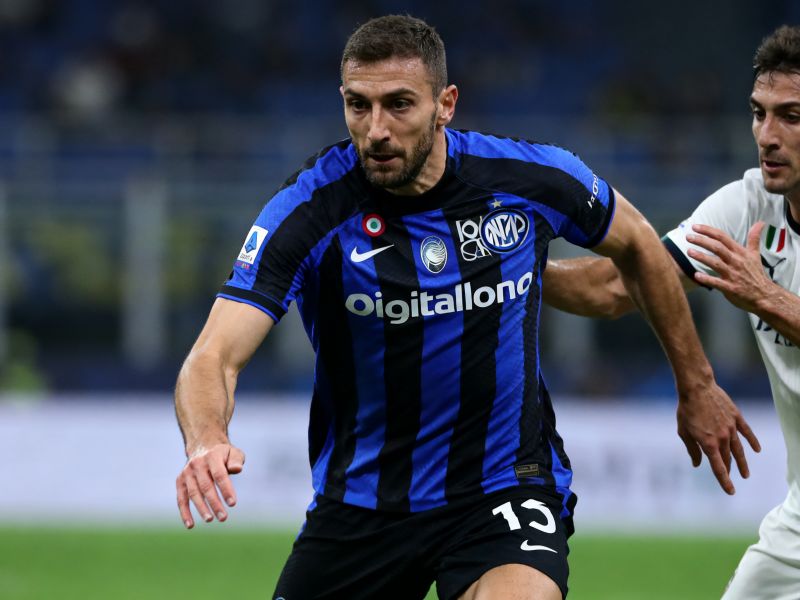
Petagna's international career has been similarly modest. He earned his first cap for Italy in 2017 under Gian Piero Ventura, but has since made only a handful of appearances. The rise of younger forwards like Gianluca Scamacca and Giacomo Raspadori has pushed him down the pecking order. Still。his contribution to smaller clubs has been significant. At SPAL, where he spent the 2019-20 season on loan, he scored 12 goals in 34 appearances, nearly keeping the club afloat in Serie A. His ability to perform in relegation-threatened sides speaks to a mental resilience often overlooked in technical assessments. Petagna doesn't dazzle with stepovers or blistering pace;he grinds out results through sheer will and tactical discipline.Off the pitch, Petagna is known for a low-key personality—no flashy cars, no viral social media moments. Teammates describe him as a consummate professional, first to arrive at training and last to leave. This humility might explain his nomadic career: he rarely complains about loan moves or bench roles。instead focusing on the next opportunity. In an era of player-power and inflated egos, that attitude is refreshing, even if it hasn't translated into a stable home at a top club. His recent move to Monza in 2023, initially on loan with an option to buy, feels like a homecoming of sorts—a chance to settle and lead the line for a club with ambitions of establishing itself in Serie A.Petagna's story is a reminder that football careers aren't linear. For every meteoric rise, there are dozens of players who navigate loans, relegation battles, and bench roles with quiet dignity. His statistical peak—the 16-goal season at Atalanta—proves he can deliver when trusted. Whether he'll ever recapture that form remains uncertain, but his journey through Italy's footballing ranks offers a nuanced portrait of a striker who refuses to fade away. At 28, Petagna still has time to rewrite his narrative. The question is whether a club will finally build around him。
or if he'll remain a reliable stopgap—a player good enough to contribute, but never quite the main event.